
I was really lucky to learn about functional medicine early in my career. I met Dr. Mark Hyman before I went to med school at Columbia and I’ll never forget what he told me: “Don’t get brainwashed.”
Robin’s Short Version
- Dots Get Connected: Your brain fog may stem from gut dysfunction, and a nutrient deficiency may trace back to low thyroid function—links conventional medicine isn’t trained to make.
- The Numbers Are Real: Parsley patients saw a 65–75% decrease in medication usage and a 31% improvement in autoimmune symptoms within their first year of root-cause care.
- Women’s Health Wins: 88% of patients improved or resolved menopause symptoms in year one, and 48% of those with prior infertility who were trying to conceive succeeded.
The Protocol in Brief
- Root cause over symptom management: Functional medicine uses advanced diagnostics — hormones, gut health, inflammation, nutrients — to find why you feel the way you feel, not just mask it with medication.
- The data is real: Parsley patients saw a 65–75% decrease in medication usage and a 31% improvement in autoimmune symptoms within their first year of care.
- Women especially benefit: 88% of Parsley patients improved or resolved menopause symptoms in year one. 48% of members with prior infertility history who were trying to conceive were successful.
By the time I was a resident in Internal Medicine at Mount Sinai Hospital in New York City, I fully understood what he meant. The root cause of your brain fog might be in your gut; a nutrient deficiency might be the result of low thyroid function. But regular doctors are trained to point out disease—not to connect the dots between body systems.
Functional medicine treats the body like an ecosystem, getting to the root cause of symptoms.
The healthcare system I saw during residency was designed to treat disease rather than to generate health. And that hasn’t changed much. People are getting sicker and sicker, taking more and more pills to match a growing list of symptoms. Ninety percent of healthcare costs today are driven by chronic conditions including mental health.[1]
As a functional medicine practitioner, I’m interested in:
- preventing and reversing chronic conditions
- identifying the root cause
- addressing symptoms through a wider range of tools including food as medicine, nutraceutical supplements, and exercise in addition to medications
I’m interested not just in treating disease, but in optimizing health.
This mission eventually turned into Parsley Health. It’s also the foundation of the work we are doing here as a community. I’m so excited about what we are going to do together in 2025!
Here’s a taste of what to expect in upcoming newsletters:
- A comprehensive preventative health checklist
- A deep dive into plant medicine
- An exploration of the ways inflammation is sabotaging your health goals
- A customizable longevity plan for your brain, bones, and booty
- And so much more!
If you want to start the year off strong, find a functional medicine practitioner. I promise you, it will make all the difference!
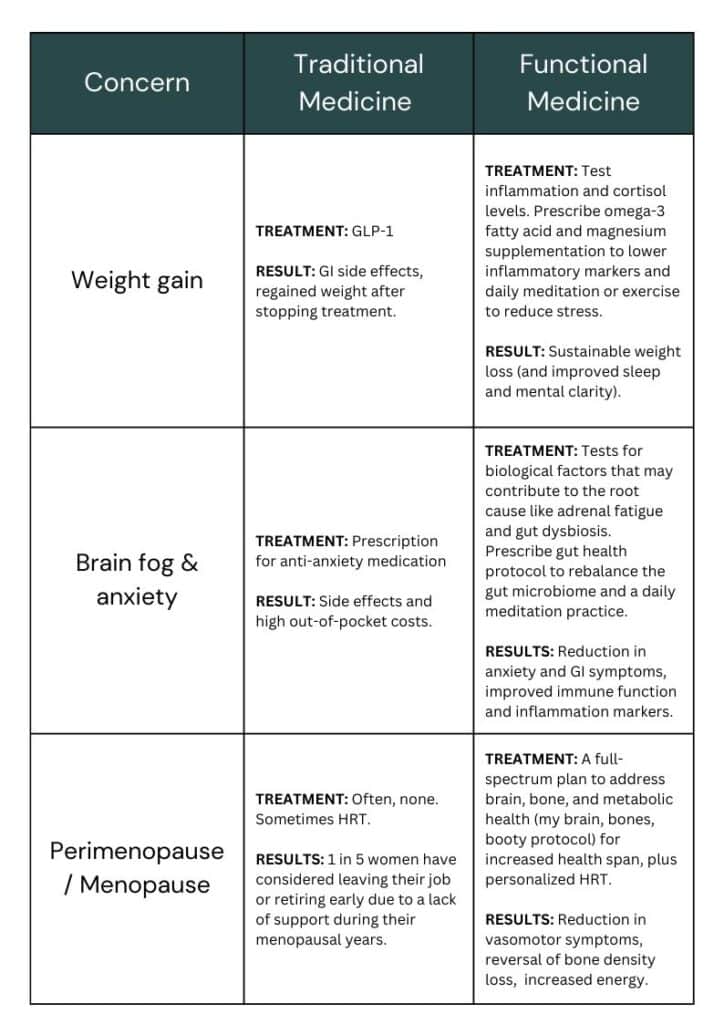
The functional medicine difference
Medications and surgery are life-changing and life-saving but traditional medicine usually fails to see symptoms as part of a bigger health ecosystem.
Functional medicine uses highly personalized holistic protocols to treat the root cause of your symptoms based on your personal genetic, biochemical, and lifestyle factors.
A functional medicine practitioner takes the time to understand the whole picture of your health; we look at lifestyle factors (diet, exercise, sleep, stress) and use advanced diagnostic tests (hormone imbalances, gut health, immune health, inflammation, nutrient imbalances) to understand how your biology and environment impact your health. Then we use that data to create a personalized plan for you to not just live longer, but actually feel better.